Quick answers
- How long can hay be stored?
- Dry, well-made hay kept off the ground under a roof keeps its feeding value for six months to a year. Quality falls faster if bales get wet or sit in the sun.
- Why does hay go mouldy?
- Moisture. Bales that touch wet ground, sit under a leaking roof or are stacked too tightly without air will heat up and grow mould.
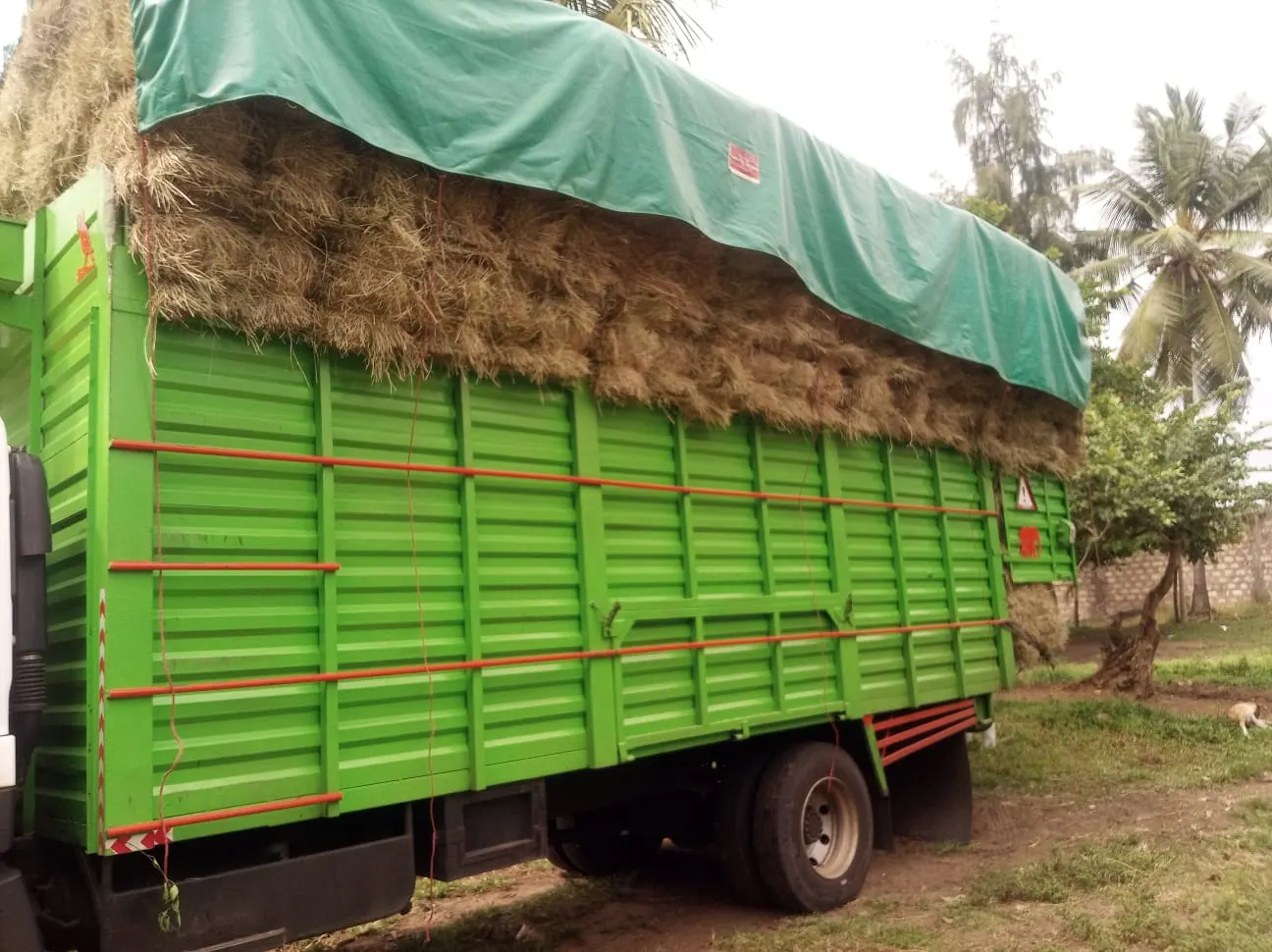
Most hay losses on Kenyan farms happen after the bales arrive, not before. A wet floor, a leaking sheet or a stack against a damp wall can spoil a lorry load within weeks. These steps cost little and save a lot.
Keep bales off the ground
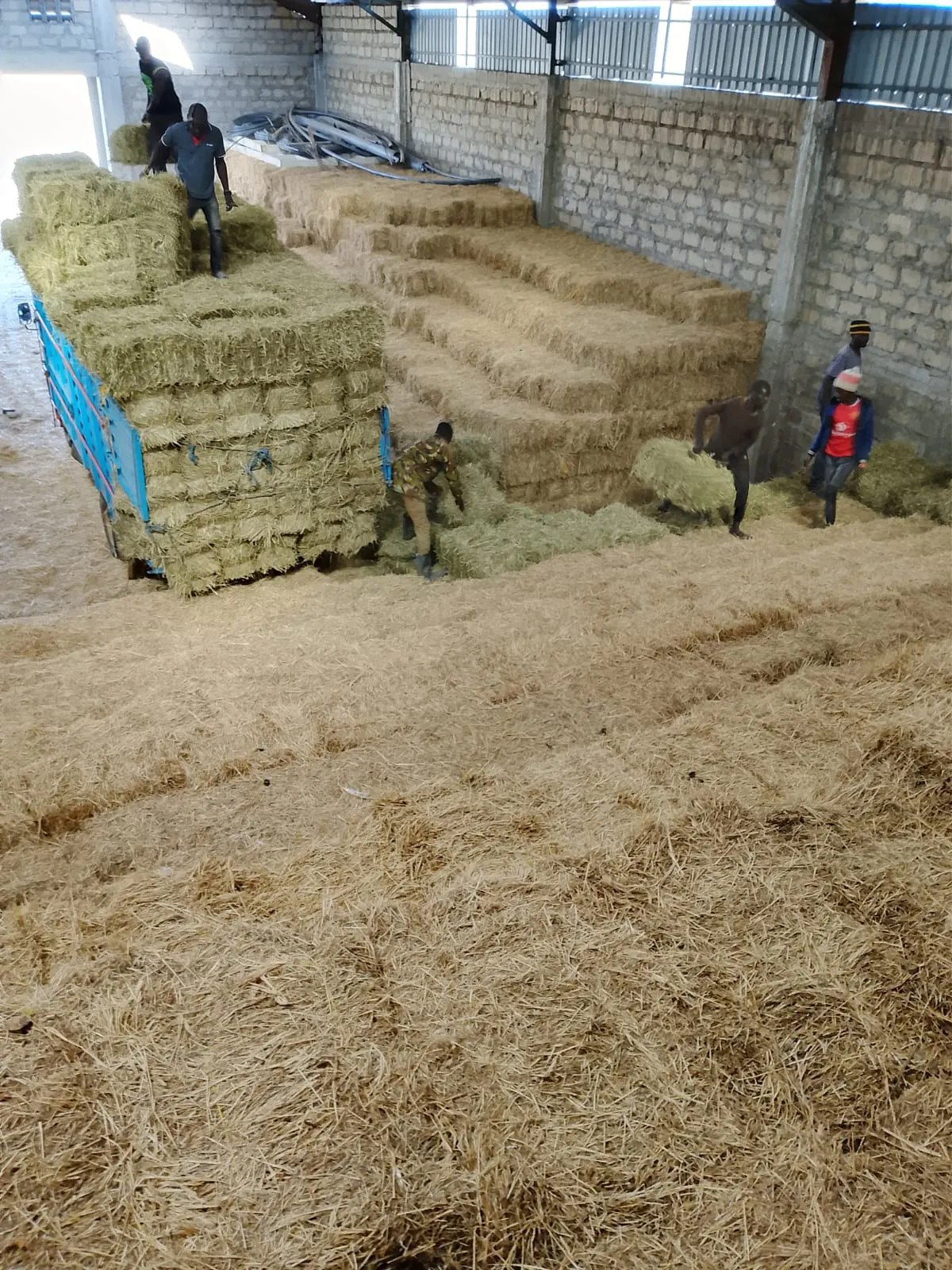
Never stack bales directly on soil or concrete. Moisture rises into the bottom layer. Use pallets, timber off-cuts or a raised slatted floor at least 10 to 15 cm high.
Roof it properly
A simple store with an iron-sheet roof and open or meshed sides works well. If you must use tarpaulins, cover the top and sides but leave the bottom of the stack open so air can move. Check sheets after every storm.
Stack for airflow
- Leave a gap of at least 30 cm between the stack and any wall.
- Alternate the direction of each layer so the stack stays stable.
- Do not pack bales tight in a closed room with no ventilation.
- Keep the stack out of direct afternoon sun, which bleaches the leaves.
First in, first out
Feed the oldest bales first. Write the delivery date on the end bale of each batch with a marker so everyone on the farm knows which to open next.
Check every week
- Push a hand into the centre of a few bales. Warm bales are heating and need to be opened and spread out.
- Look for grey or white dust and a musty smell. Mouldy hay should not be fed, especially to horses.
- Watch for rats and termites, and keep the area around the store clear.
When you receive a delivery, check a few bales before signing off. Good hay is green-gold, smells sweet and does not throw up dust.